Monday, July 6, 2015

Bulow Creek

View of the park from the creek

Bulow Creek/

Bulow Plantation Ruins Historic State Park

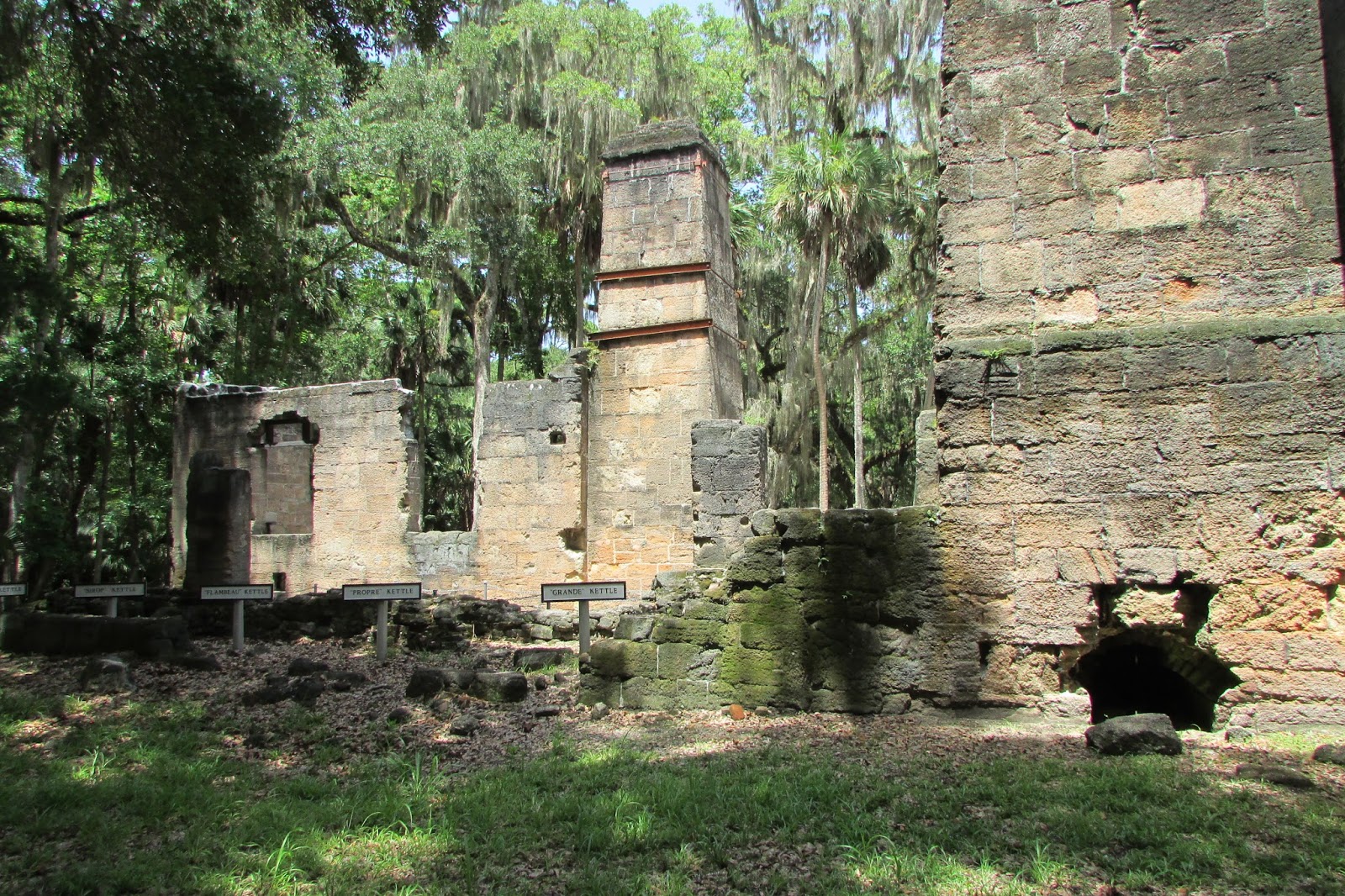
The ghostly remnants of Bulow Plantation, a once prosperous sugar mill plantation which was later abandoned and destroyed in the Second Seminole Indian War of 1836, is listed on the National Register of Historic Sites, sits in a quiet area of Flagler County and is part of the Florida State Park system. It is also recognized as a State Canoe Trail. This is where our morning began.


Our upstream journey began through marshy, wide waters. I only saw one small alligator the entire day though I'm sure plenty more successfully hid themselves from our view. As we meandered around the twisty waterway we passed many blooming scarlet hibiscus and swamp rose mallow plants. 


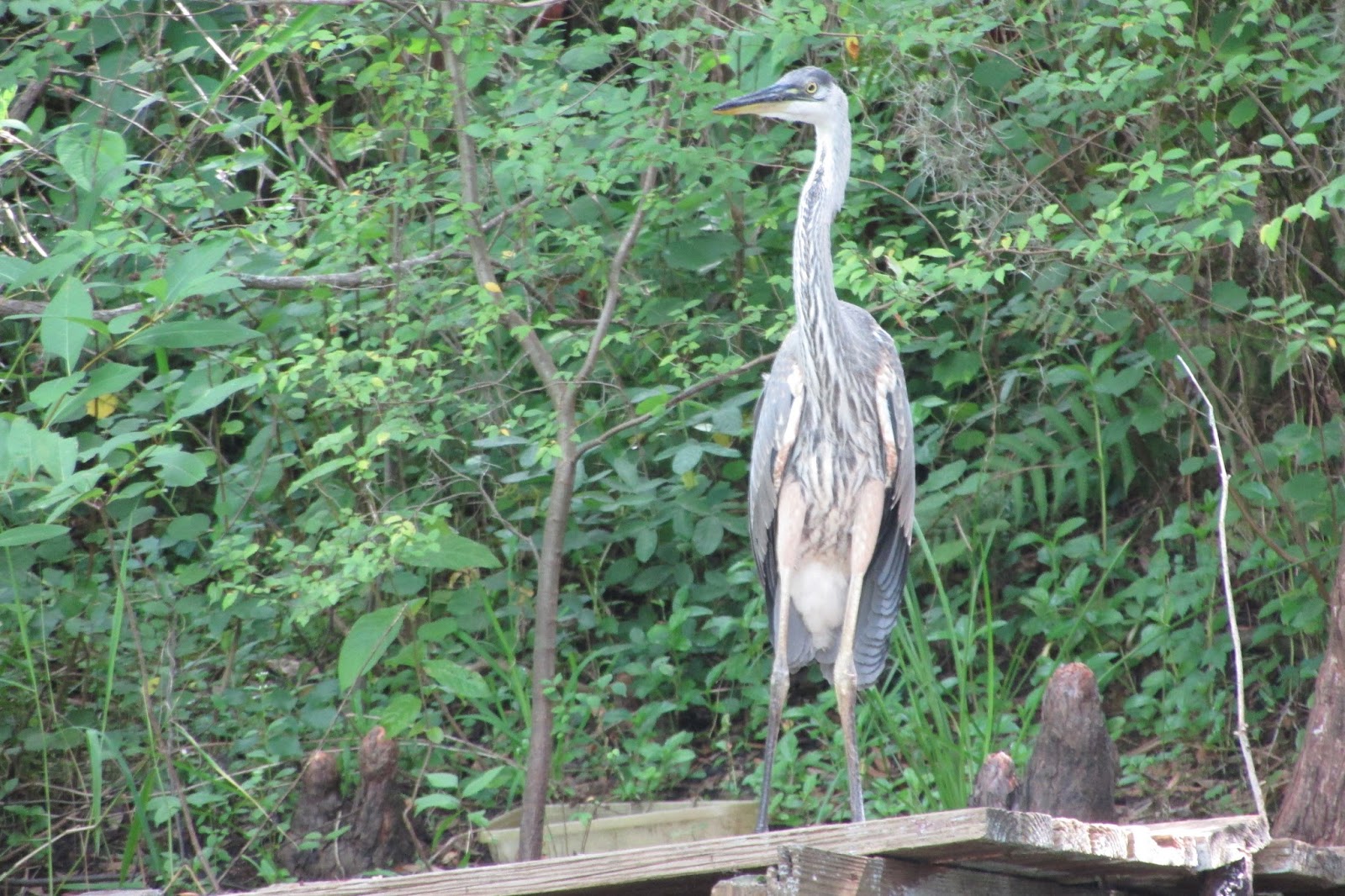
We passed many Great Blue Herons..


Dinner Time!!!
The setting changed from coastal waters with sawgrass on either side to clusters of palms and tropical plants. Eventually the water became covered with duckweed and it was like paddling through a bowl of thick pea soup! 


Just around the bend the creek became more tree canopied and the water clear once more, but it was low and there were several logs to scoot over. JB got to see a black and white hog by the creek bank, but when Roxy caught wind of it and began to bark, it disappeared back into the woods. I did get to hear it grunt and snort before it took off! This juvenile Little Blue Heron guided us into the creek. (Yes, hard to believe that a white bird with greenish legs will soon turn all blue!)


A hawk flew past us into the tree and silently watched as we attempted to turn our boats around in the shallow water with logs poking out.


  After turning our yaks around and heading back toward the park, we passed a couple of pairs of loud osprey by a nest. Fun fact: The osprey is one of the most widespread birds of prey and can be found on every continent except Antarctica. (National Geographic)


JB mesmerized by the Osprey


We passed by a serene view of sawgrass and a long dock with two chairs facing the water. In that moment I could easily close my eyes and picture an elderly couple quietly sitting by the water's edge together listening to the gentle sounds of nature whispering in their ears.


After our paddle, we walked along the nature trail to view the ruins of what was once East Florida's largest sugar mill plantation. Originally developed by Major Charles Wilhelm Bulow, the plantation cultivated crops of indigo, cotton, rice and sugar cane. His son, John Joachim Bulow, inherited the plantation upon his father's death in 1823. The State of Florida acquired the property in 1945 and designated it as a State Historic Park in 1957. It wasn't until September 1970 that is was added to the National Register of Historic Places.

Built of coquina sedimentary rock.

The remnants of a storage house used as a cooler by utilizing the cold springwater that once bubbled beneath.


John James Audubon, an artist and naturalist, once visited Bulow Plantation in his quest for studying American birds. His painting of "Greater Yellow Legs," which was a part of his "Birds in America" series shows part of the Bulow Plantation in the background.

 http://audubonoffloridanews.org/wp-content/uploads/2011/03/tell-tale-godwit-or-snipe.jpg

In 1831, John James Audubon visited the plantation and immortalized it in his painting of the Greater Yellowlegs as part of his Birds of America series. - See more at: http://audubonoffloridanews.org/?p=7311#sthash.E8ZtOSHG.dpuf

While walking and talking along the nature trail, we were startled by a very large snake which slithered directly in front of us. It stopped and we stopped, it turned its head toward us and then began to move forward into the woods. We just had a visit from an Eastern Diamondback Rattlesnake - one of the four venomous snakes found in Florida and the largest venomous snake in North America!!!!


In 1831, John James Audubon visited the plantation and immortalized it in his painting of the Greater Yellowlegs as part of his Birds of America series. - See more at: http://audubonoffloridanews.org/?p=7311#sthash.E8ZtOSHG.dpuf
Bulow Creek and Bulow Plantation Ruins Historic State Park are truly hidden gems full of rich Florida history and well worth the trip to visit.

Friday, May 29, 2015

Withlacoochee Weekend!


WITHLACOOCHEE
(MEMORIAL DAY)
WEEKEND
May 23, 24 and 25, 2015

Our trip begins as we pull into the Silver Lake Campground which is located in Hernando County, Florida, and is part of the Withlacoochee State Forest. Though JB mentioned he had seen hogs many times there, I never did manage to see any, but we did see many different types of wildlife during our three day stay. It started with a nest of young hawks in the trees adjacent to our campsite. They were loud little squawkers, but interesting to watch. They seemed to rely on their parents to bring them food even though they could clearly fly and seemed big enough to be able to catch their own food. I read somewhere that hawks will sometimes help supplement food for their young for up to eight additional weeks while they are learning to hunt. They would get so loud and excited when one of the parents brought food back to them in the tree that I got a little disappointed when JB didn't get that excited when I handed him his dinner that night. Maybe we should've had frog legs instead of barbequed chicken? Eww.


Anyway, JB backed the ‘sita (the Casita aka Marshmellow - misspelling intended) into the campsite (while blind folded, with one hand tied behind his back). I couldn't WAIT to go exploring! I also couldn't wait to return and relax by the campfire while being serenaded by the Rat Pack with a cold one in my hand. We never did get serenaded by the Rat Pack due to a technical glitch (forgot the power cord to the cd player), but "The Dove" radio station did a stellar job of providing entertaining music.I'm not sure why that radio station is known as "The Dove..." maybe because it's "Coo-l?"


Once the 'sita was set up, we ventured out to Hog Island and put in there. We decided to paddle to Silver Lake and then back to Hog Island. Wait...before you say to yourself, "Self, why didn't they just paddle from Silver Lake Campground to Hog Island and back since they were staying at Silver Lake?" The answer to that question remains a mystery....

(Where the Hogs like to hide!!!)


Beautiful, serene Withlacoochee


We noticed a little head that popped out in the water, but it was moving way too fast to be a turtle. It turns out it was a snake.  

Forest Gump feather blowing on a stick....
A log swallowing JB and his kayak


We ended the day relaxing by the warmth and comfort of a campfire while listening to The Dove crank out the tunes. The perfect end to the perfect day.


The next day we paddled from Nobleton to Hog Island:


An oak tree and a cypress tree that appear to have grown into eachother.


The sky began to darken and the rumbling of thunder was getting louder and louder. We had to make an effort to paddle faster unless we wanted to potentially become fried paddlers on the river.


The rain went away as quickly as it started....
 
After the paddle, we decided to walk on a trail by our campsite for a bit.


JB spotted this owl in a tree...


The next morning we decided to paddle from Nobleton to Lake Townsend and back. We saw many itty bitty turtles, a few alligators (mostly small ones) and a few different kinds of birds.


Another amazing adventure on the water and on the wonderful Withlacoochee!!!!